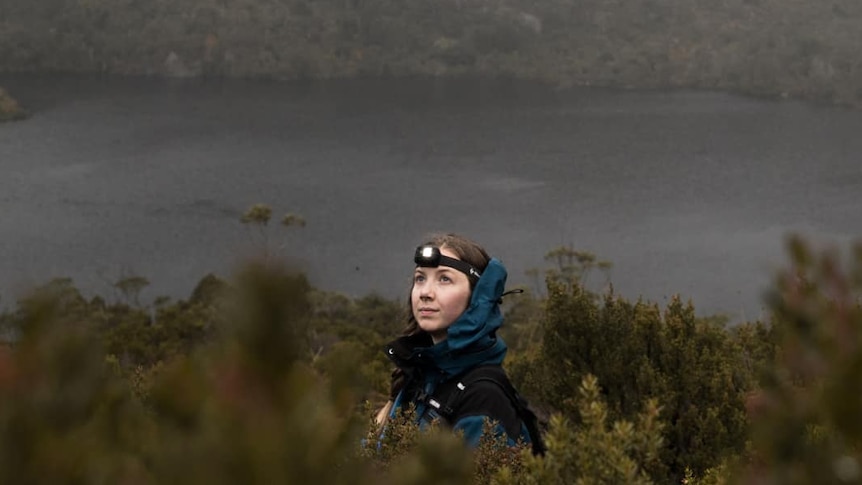
Imagine a night stuck in the wild: you are alone, lost, cold, hungry and perhaps injured or unable to call for help.
Key points:
- Rescue teams receive “regular” calls to the Scenic Rim
- A torch, food, thermal blanket, GPS and map are some of the most important things to pack on a hike
- Lifeguards urge people to stay on designated trails and be prepared this bushwalking season
This is the scenario the SES asks hikers to consider at the start of the bushwalking season.
Peak season for bushwalking in Queensland begins in autumn when the days become cooler and the humidity drops.
However, the days are also getting shorter.
According to Paul Hinchcliffe of the Tamborine Mountain SES, emergency teams have already been called in this year to attend to a series of incidents in the Scenic Rim area, a bushwalking mecca west of the Gold Coast.

“Here in the Scenic Rim we have so many national parks around us, we are regularly called out to rescue or find people who have gotten lost,” he said.
Mr Hinchcliffe said when hikers go missing, the SES often gets the call in the late afternoon.
He said it can take hours to then assemble a crew of four or more, with many rescues continuing overnight.
“[One] gentleman [who recently called for help] was about 700 yards from the trail and way up in the Mount Barney Range,” he said.
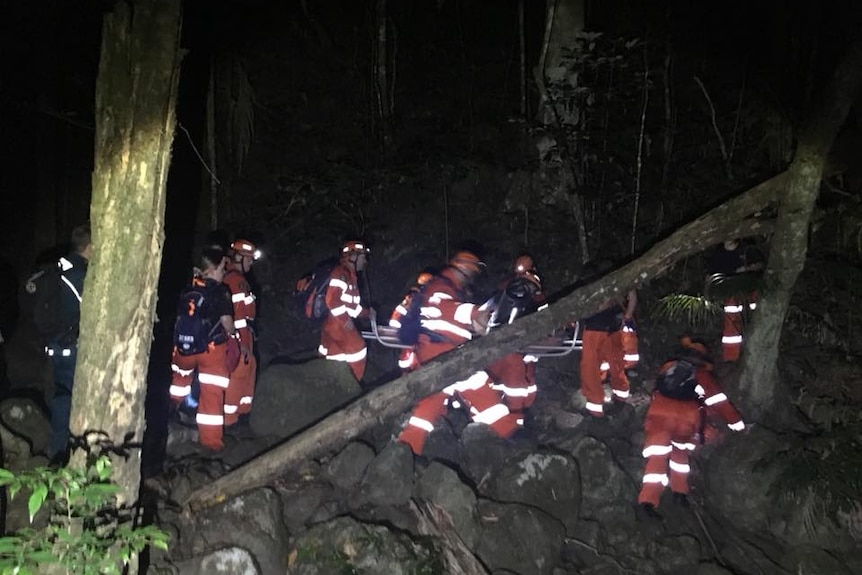
Earlier this year on Mount Barney, the SES carried a bush walker 8 kilometers on a stretcher until “daylight the next day”.
In the dark, a thermal – or “space” – blanket and a torch are considered essential tools.
“It’s surprising how cold it gets in those mountains and in the rainforest, especially if a bit of a breeze or wind picks up,” he said.
“The advantage of having the torch [is] you may be able to find yourself on the trail, but it helps us find you if we can see the light in the distance.”
What else should you do?
Letting someone know where you are going and your expected return time is an important start, according to Hinchcliffe.
Hiking in a group of two or more, carrying food, water, a first aid kit, a personal locator beacon and a map are other must-haves.
A fully charged phone and spare batteries are also essential, but knowing your location and staying there is one of the most important pieces of the puzzle a hiker can give SES.
“If you feel you’re lost, make the call [to triple-0] rapidly. Don’t keep going around in circles because the sooner we can catch you the better,” he said.
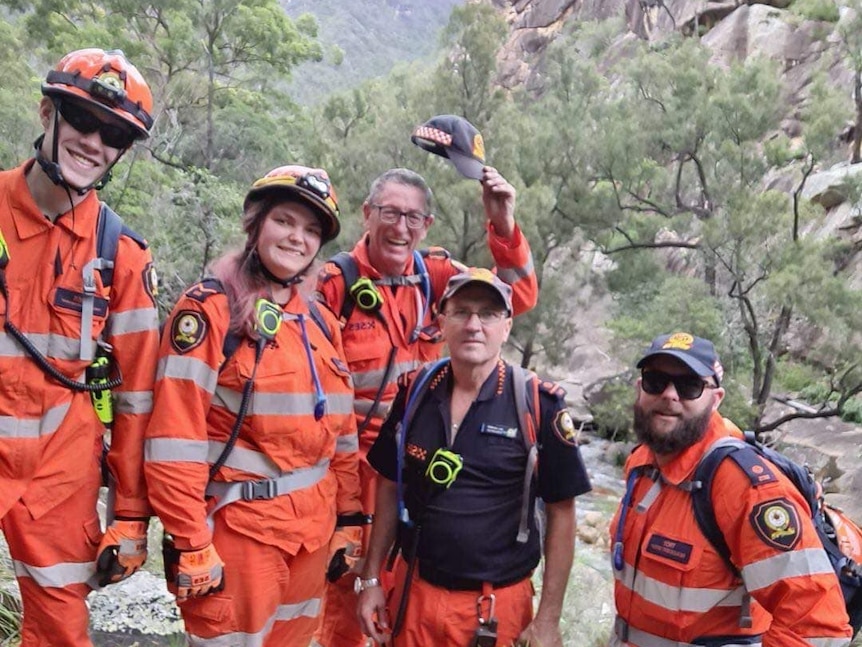
Mr Hinchcliffe said people are often ‘quite sheepish’ but ‘always very happy’ to see rescue teams.
“We try to cheer them up when we go out,” he said.
“But we also remind them of all the things they need to consider when they go on a great hike.”